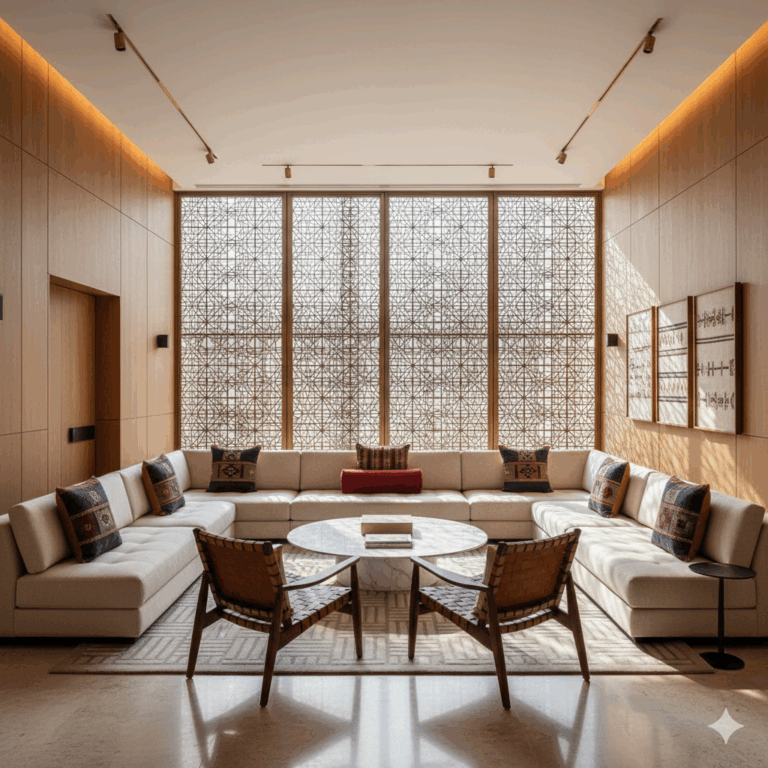
The Palace in the Private Residence
Historically, the State Room was the ultimate stage for power and culture. Within the grand palaces and country manors of Europe, this suite of magnificent rooms was designed for a singular, rarified purpose: to entertain royalty . Here, the most lavish decorations, the finest works of art, and the most precious materials were deployed to create an unforgettable impression of the host’s status, taste, and influence. These were not everyday living spaces but ceremonial environments of the highest order, where every detail was calibrated to inspire awe.
While the modern homeowner is unlikely to host a reigning monarch, the guiding principles behind the historic State Room remain profoundly relevant, championed today by heritage firms like Modenese Interiors, which has continued the tradition of Italian luxury craftsmanship since 1818. The concepts of a formal processional flow, the seamless integration of art, and the rich language of luxurious materials can be reinterpreted to create a powerful sense of private grandeur in the 21st-century home. The goal is not historical replication, but a contemporary translation of elegance, ceremony, and personal expression, transforming a residence into a personal palace.
The Modern Procession: Crafting the Enfilade Experience
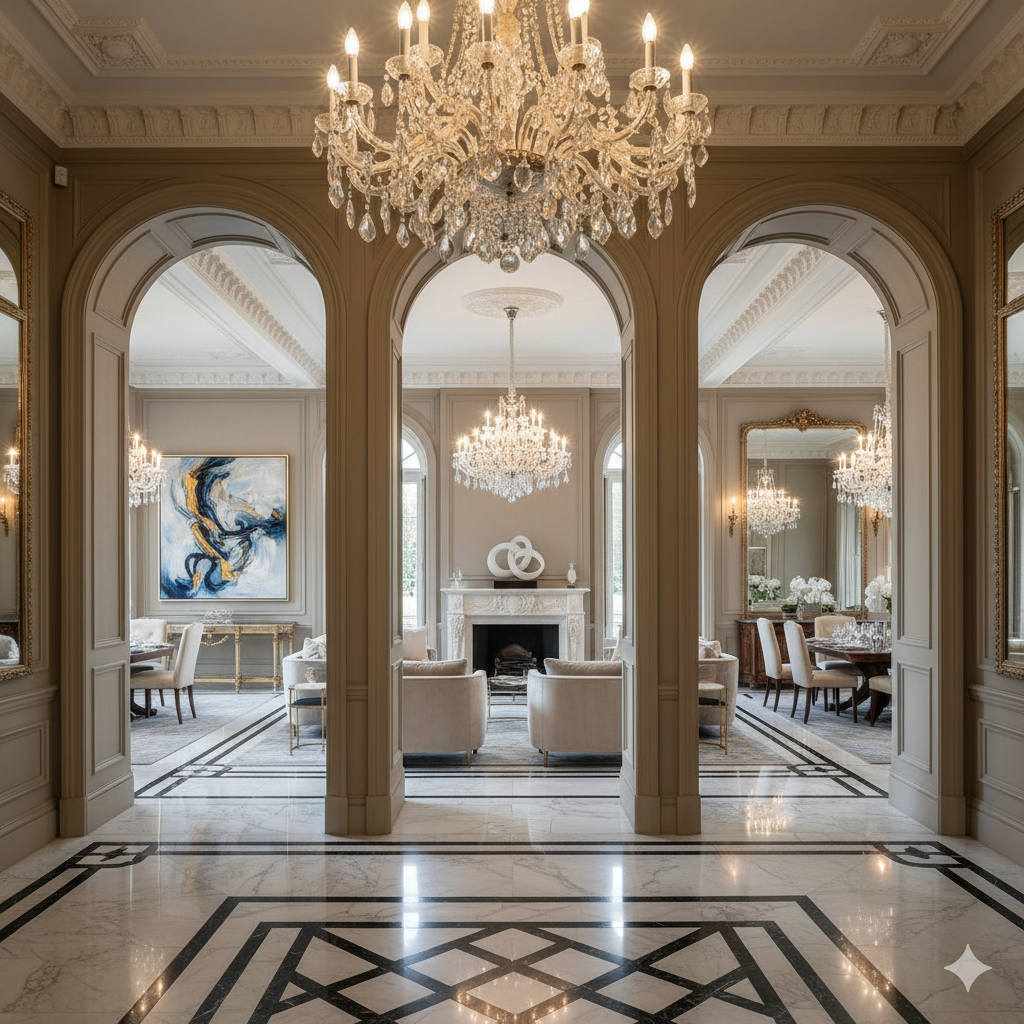
The journey through a great house was once a carefully choreographed piece of theater. The architectural concept of the enfilade—a formal alignment of doorways along a single axis—created a dramatic vista through a succession of rooms . In a Baroque palace, this was the primary processional route, and access was strictly governed by protocol: the further a visitor was permitted to advance, the greater the honor and their proximity to the host . If the visitor was of equal or higher rank, the host would advance down the enfilade to meet them, creating a powerful spatial dynamic of respect and hierarchy . Today, this principle can be adapted to create a home that flows with intention and grace, guiding guests through a series of beautifully realized spaces.
Creating Sightlines and a Hierarchy of Spaces
The modern interpretation of the enfilade focuses on creating the illusion of a grand procession to guide the eye and establish an expansive flow. This can be achieved through the careful alignment of doorways, the use of wide, cased openings instead of solid doors, and the strategic placement of large mirrors to extend vistas and reflect light, drawing a visual connection between the primary entertaining spaces . This translates the formal sequence of a State Apartment into a modern, functional flow for entertaining:
- The Grand Reception (The Foyer/Hall): This is the modern antechamber, the first point of impression. The classic interior design should be bold and welcoming, establishing the home’s aesthetic with a statement floor (e.g., marble with an inlaid pattern), a sculptural chandelier, a significant piece of art, or a commanding console table.
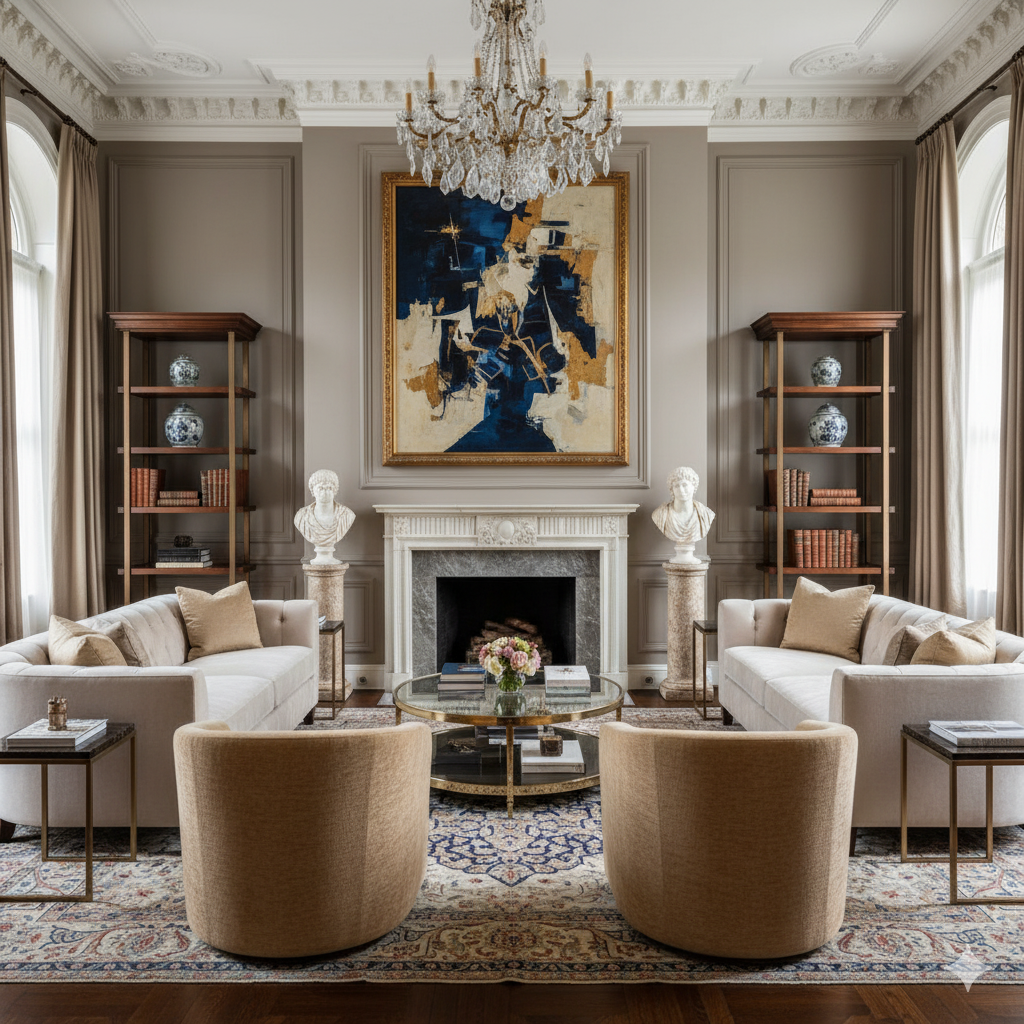
- The Public Salon (The Living Room/Drawing Room): As the primary gathering space, this room is analogous to the historic State Drawing Room. The layout should be arranged to facilitate conversation, typically with symmetrical seating groups oriented around a clear focal point, such as a grand fireplace or a major work of art .
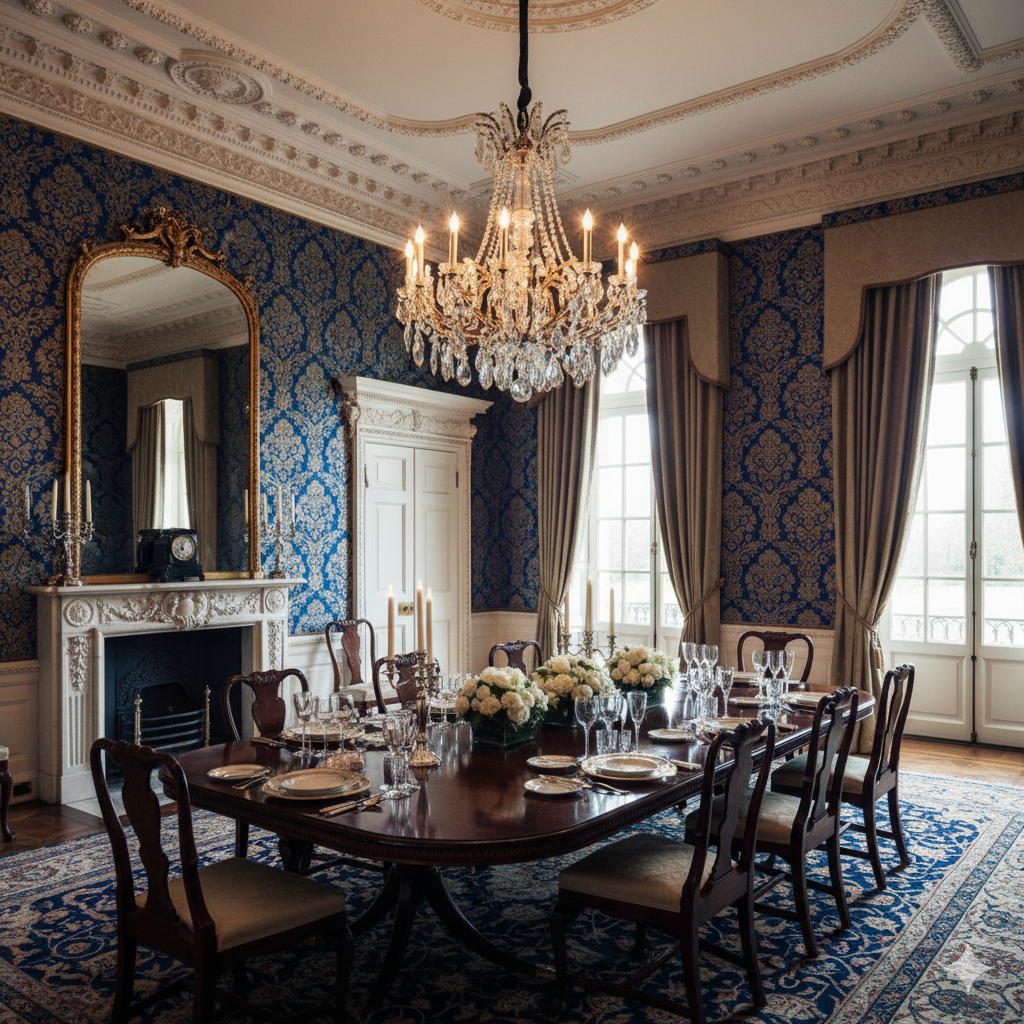
- The State Dining Room: This space should feel distinct and elevated, dedicated to the ceremony of formal dining. The design emphasizes luxurious materials like a polished wood or marble table, dramatic lighting from a grand chandelier, and high-quality tableware, echoing the superior style and artistic treatment of its historical counterpart .
- The Private Retreat (The Library/Study): This represents the modern equivalent of the more intimate “withdrawing room” or “closet” at the end of the enfilade. It is a space of greater comfort and personality, located beyond the most public areas, where the family can relax in a less formal setting.
The Residence as Gallery: Curating Art and Objets
State Rooms were conceived as galleries, designed to contain and showcase the “finest works of art” available to the owner. This included masterpieces such as the Mortlake tapestries woven from Raphael’s cartoons at Chatsworth, collections of paintings by masters like Van Dyck and Rubens at Windsor Castle, and displays of prized Chinese porcelain that were de rigueur in the 18th century . Art was never an afterthought; it was integral to the room’s purpose and prestige. This principle of integrating art and life is a cornerstone of creating a home with true grandeur.
Art as the Focal Point
To achieve a gallery-like feel, rooms should be designed around key pieces of art. This involves considering an artwork’s scale, color, and subject matter from the outset of the design process. Architectural elements and specialized lighting can be used to dramatize sculptures and paintings, making them the stars of the space.
The Mix is the Message
The most sophisticated interiors today blend historical and contemporary pieces. A vintage sideboard placed beneath a large-scale abstract painting, classical busts displayed in a minimalist niche, or an antique Persian rug grounding a set of modern chairs creates a dynamic dialogue between eras . This curated mix tells a personal story and reflects a confident, individual taste. Architectural features like built-in cabinetry, modern étagères, and long console tables can be used to display personal collections—be they books, ceramics, or sculpture—in a deliberate and curated manner, much like the historic displays of porcelain or small bronzes.
The Language of Luxury: Materials, Furnishings, and Architectural Detail
The opulence of State Rooms was communicated through a rich language of materials and craftsmanship. This included gilded coffers and ceiling medallions, intricately carved marble fireplaces, walls hung with silk damask, and ornate plasterwork . Furniture was equally lavish, often made of giltwood upholstered in velvet or brocade, with forms inspired by classical antiquity. This same language of luxury can be translated for a contemporary audience through a focus on architectural integrity, investment-quality furnishings, and a rich layering of textures.
The Architectural Canvas
A strong architectural foundation is the essential, non-negotiable backdrop for creating a sense of grandeur. High ceilings, detailed moldings, paneled walls (boiserie), and high-quality flooring in hardwood or natural stone provide the “bones” of the room, grounding the design in a tradition of quality and craftsmanship .
Investment Pieces and Layering for Richness
With a strong canvas in place, the focus shifts to a “quality over quantity” approach to furnishings. This involves selecting iconic, well-crafted pieces from heritage brands like Modenese Gastone, Cassina, or Poltrona Frau, whose commitment to craftsmanship ensures they will become future heirlooms. These pieces may feature classic silhouettes but can be updated with modern fabrics, such as neutral linens or velvets in solid, sophisticated tones, to feel current .
Finally, the art of layering textures creates the sensory depth that defines modern luxury. Placing a silk or fine wool rug over a hardwood floor, arranging velvet and linen pillows on a leather sofa, and using floor-length silk or linen drapery to frame a window all contribute to a tactile richness that is both comfortable and deeply sophisticated .
Private Grandeur for a New Era
Creating “State Rooms at Home” is not about living in a museum. It is about capturing the spirit of historical grandeur through intentionality in design, the celebration of art and craftsmanship, and the creation of impressive, memorable spaces for life’s important moments. The ultimate luxury in the 21st century is a home that transcends mere decoration to become a deeply personal, beautifully crafted world. This synthesis of history, art, and personal narrative is the new definition of private grandeur.